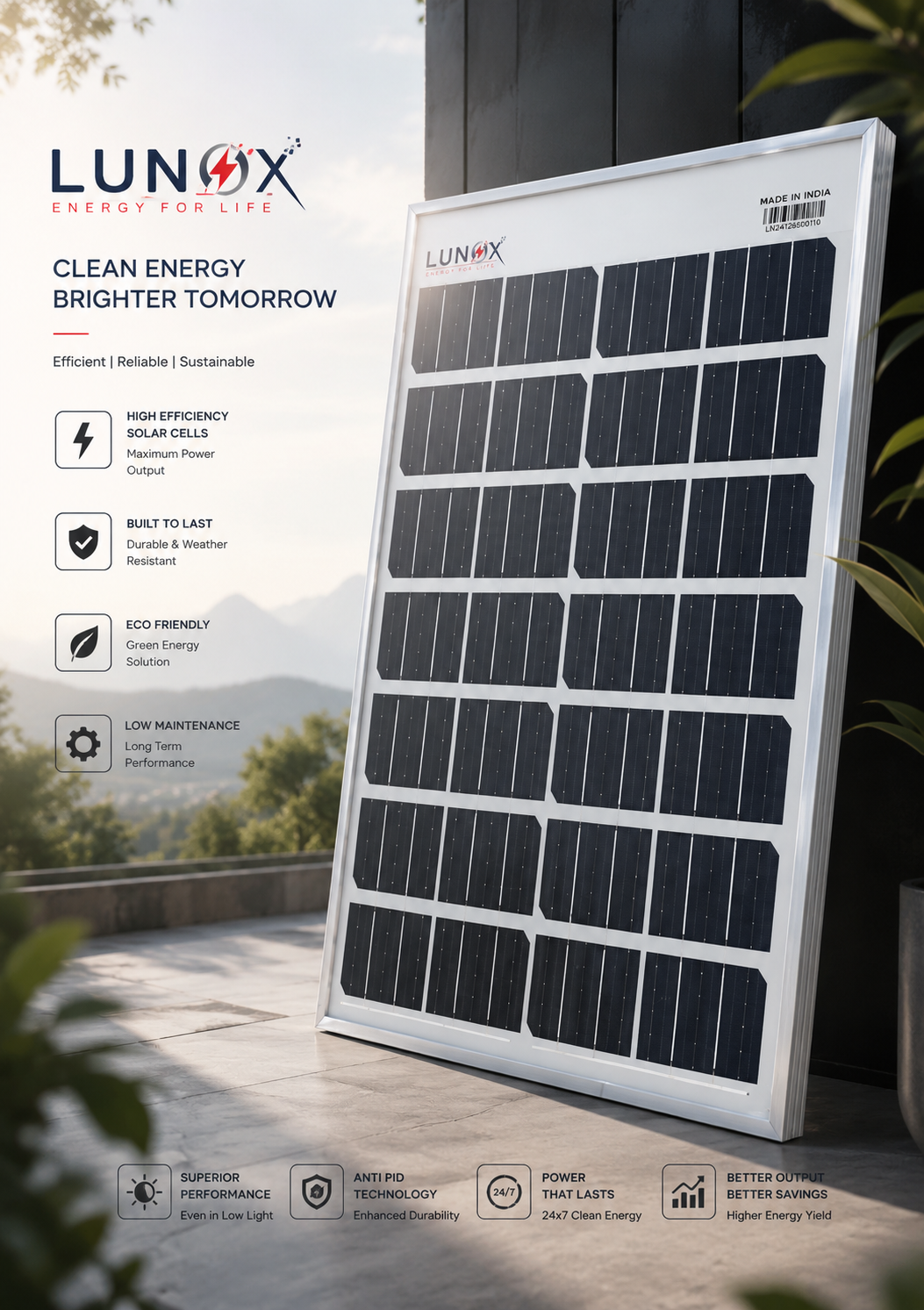
Cell technology has evolved, but the choice between mono and poly still impacts your project ROI. Here is what has changed — and what has not.
Efficiency
Monocrystalline cells typically deliver 20-22% efficiency, while polycrystalline modules sit around 17-19%. For limited roof space, mono panels generate more power per square meter.
Cost per Watt
Poly panels remain the budget-friendly choice, offering a lower upfront cost per watt. For ground-mounted systems with plenty of space, they can still be the smarter investment.
Temperature Behaviour
Mono panels generally have a slightly better temperature coefficient, meaning they hold output better in the Indian summer heat.
The LUNOX Verdict
We manufacture both technologies, because the right answer depends on your site, budget, and energy goals. Our engineers will help you match the module to the project — not the other way around.